
Jun 2024
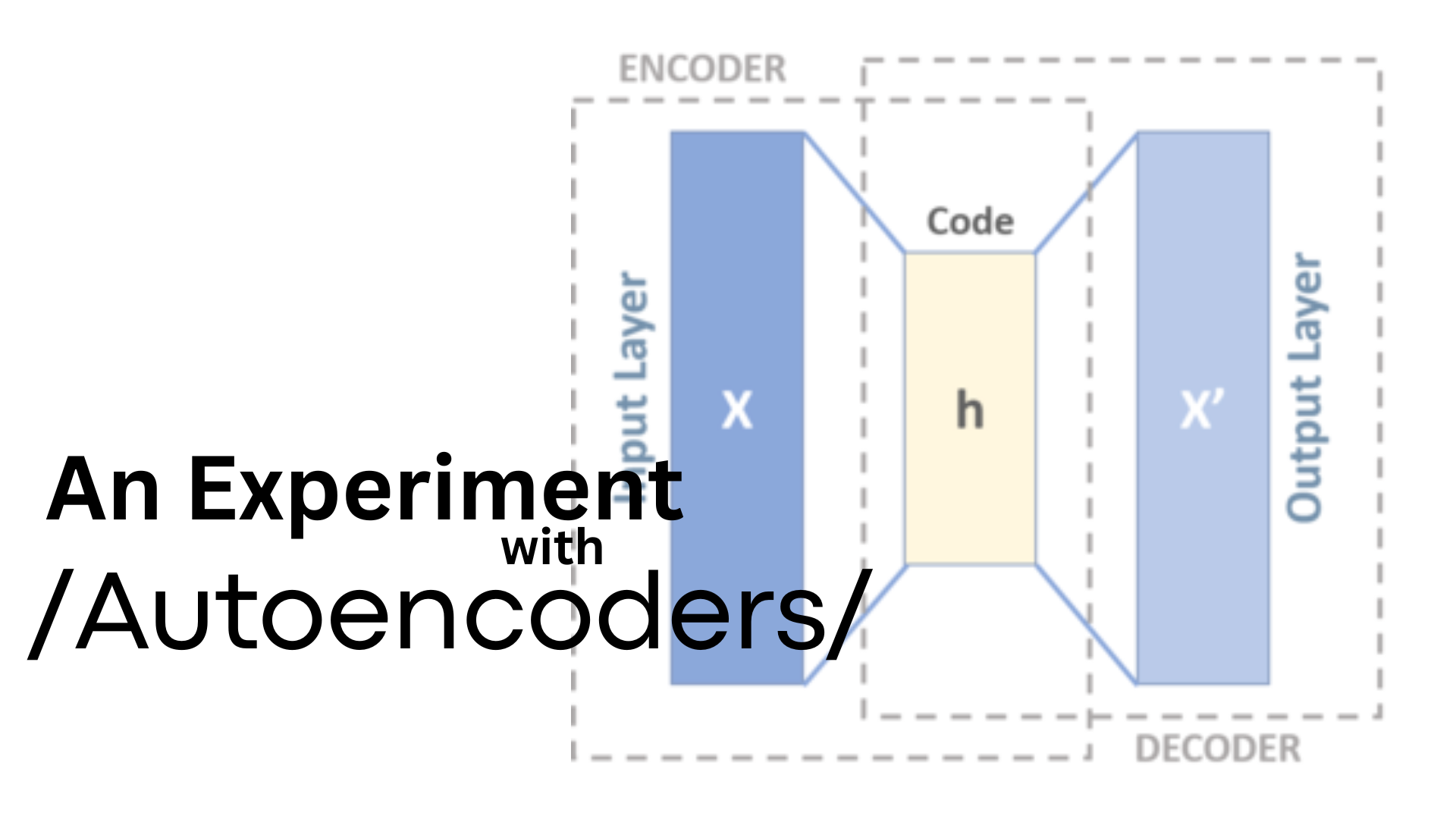
As part of my Deep Learning final project, I built a simple autoencoder model to explore how neural networks can learn compressed representations of image data. An autoencoder consists of an encoder that compresses the input into a lower-dimensional representation, and a decoder that reconstructs the original input from this representation. They are commonly used for dimensionality reduction, image denoising, and representation learning.
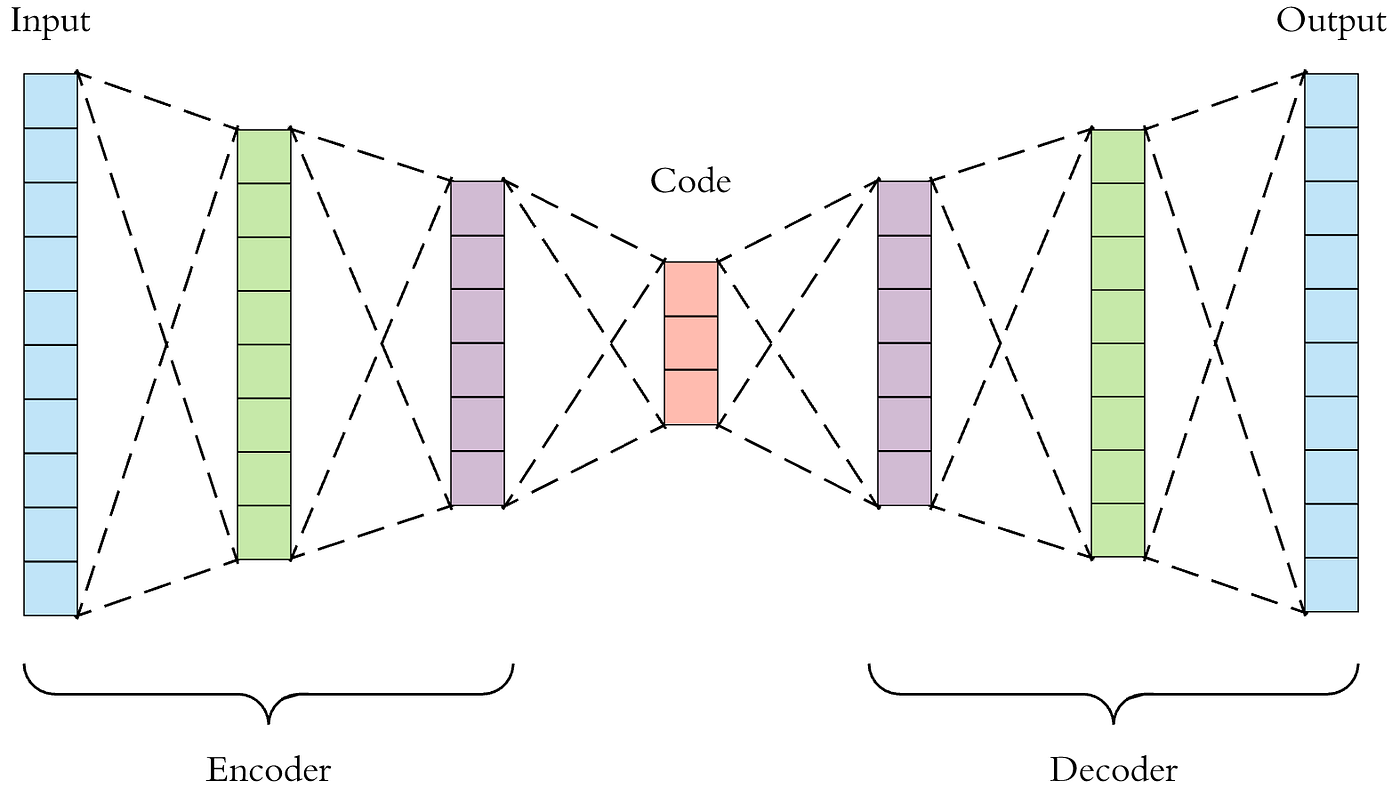
source: Medium.com
For this experiment, I used two classes from the Fashion-MNIST dataset and trained the model to reconstruct the input images after passing them through the compressed latent representation.
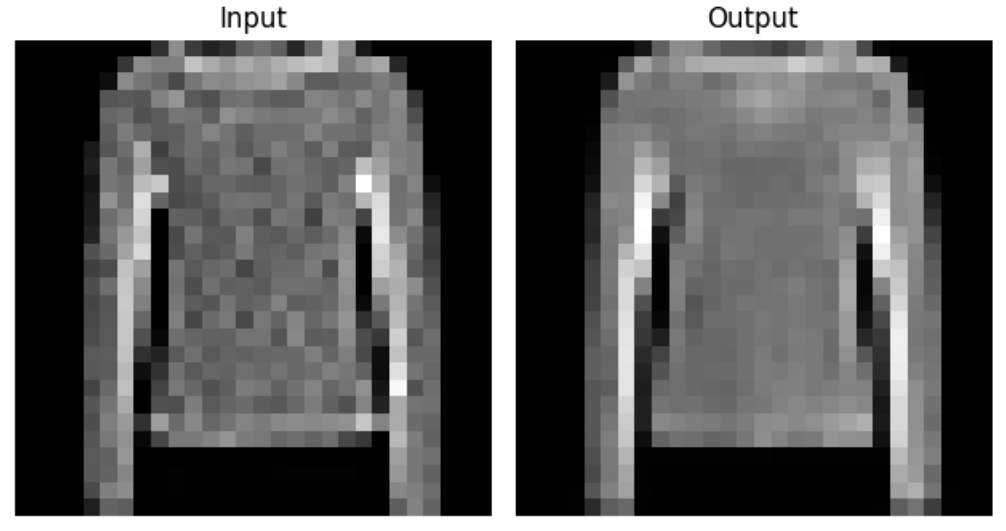
Image Input and Output Sample
To evaluate the quality of the reconstruction, I used the Structural Similarity Index Measure (SSIM), which measures the structural similarity between the original input images and the reconstructed outputs. This allowed me to assess how well the autoencoder preserved important visual information during compression and reconstruction.
I experimented with several autoencoder configurations to improve image reconstruction, starting with a baseline convolutional autoencoder and then testing longer training, Batch Normalization, a deeper architecture, and an SSIM-based loss function. The models were evaluated using Structural Similarity Index Measure (SSIM) alongside visual comparisons between the original and reconstructed images. The experiments showed that increasing the model depth and modifying the training setup could improve reconstruction quality, although the improvements between configurations were relatively small.
See the code here: Google Colab
More on my thought process here: Youtube